

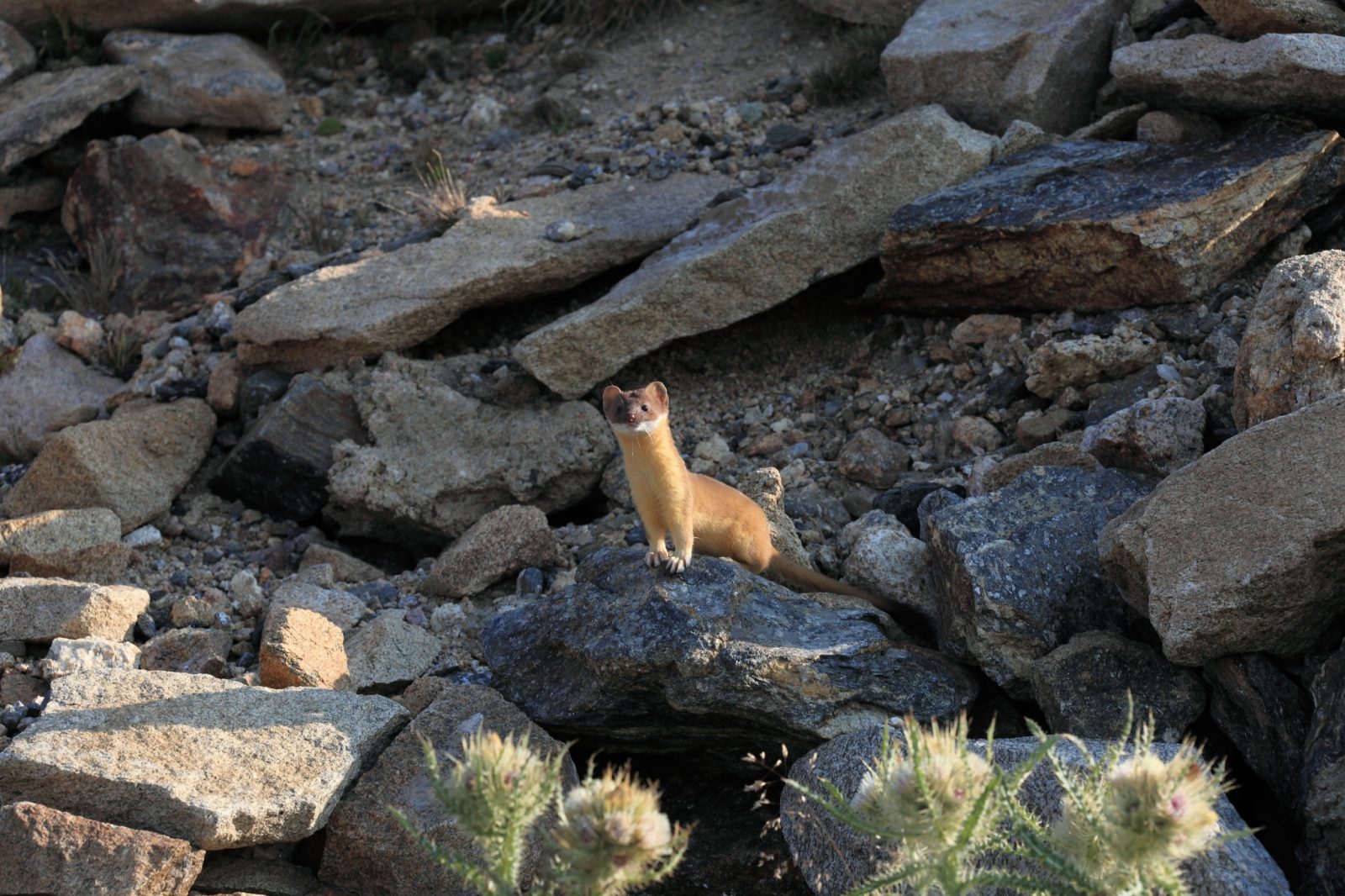
They may be cute, but long-tailed weasels (Neogale frenata) are one of nature’s fiercest predators. A sharp sense of sight, hearing, and smell, along with the crushing force of their bite, proves that this weasel is made to hunt.
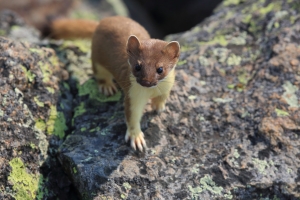
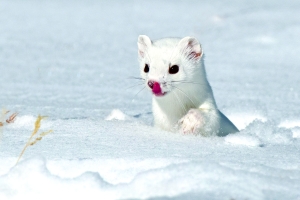
Long-tailed weasels have adapted to use snowy conditions to their advantage. They molt twice a year to blend in with their environment, sporting a white winter coat that turns light brown with a creamy yellow chest and belly in the summer.
Their black tipped tail remains year-round to confuse predators like raptors and coyotes. The timing of weasels’ biannual molt is triggered by photoperiod—the amount of sunlight available in a day.
This photoperiod response makes weasels vulnerable to change, such as the historically dry winter Colorado has experienced this year. With snowpack levels across the state at an all-time low, predators can easily spot a long-tailed weasel’s white winter coat amongst dirt and rocks.
To conserve energy in the winter, they will hunt for several hours and then sleep for several hours during the day. Long-tailed weasels also consume up to 40-50 percent of their own body weight each day to keep up with their high metabolism.
Their diet consists mainly of small to medium-sized mammals such as chipmunks, squirrels, pika, voles, and mice. They’ll sometimes go after larger animals like snowshoe hares or marmot pups.
However, most of their prey hibernates, challenging weasels to find enough food. Their small, tube-like body allows them to fearlessly raid burrows as they hunt beneath the snow surface—an area called the subnivean. “Once close enough, weasels quickly wrap themselves around their prey and deliver a swift, fatal bite to the base of the skull,” said Kathy Brazelton, former RMNP district interpreter.
If you spot a long-tailed weasel in Rocky or another interesting critter, send your photo to [email protected] for a chance to be featured in the Nature Notes section of our newsletter.