By Gabby Sherwood, Communications Associate
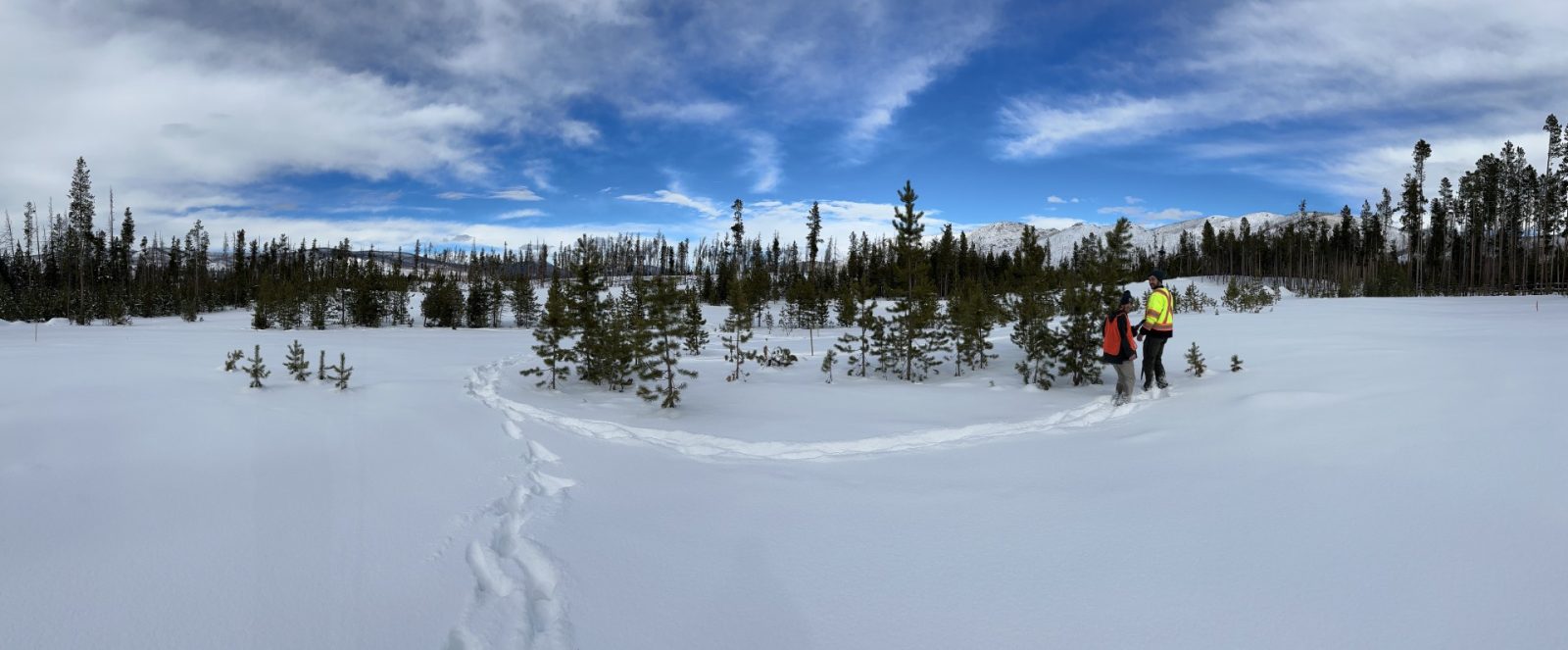
From surveying invasive plant species to repairing an eroded trail, stewardship takes many forms.
Behind the scenes, each of these efforts begins with another form of stewardship, one that takes place in front of computer screens, across digital maps, and within carefully managed datasets: geospatial data.
In fact, Rocky Mountain National Park (RMNP) collects and maintains an astonishing amount of geospatial data: 1,196 data layers, which is critical to managing a national park.
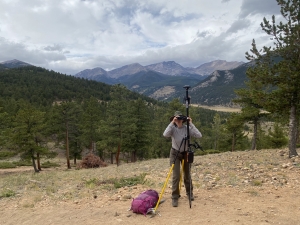
Within Rocky’s Resource Stewardship division, the Geospatial Office hires interns to help manage this essential data. Supported in part by Rocky Mountain Conservancy, the geospatial program leads are training the next generation of land stewards in crucial data, mapping, and geospatial technology skills in an intensive, hands-on internship.
By providing current data and high-quality map products that keep visitors and staff informed of the best available information, the interns’ contributions benefit all areas of Rocky and its gateway communities.
“GIS permeates every aspect of natural resource management today,” said RMNP Exotic Plant Management Lead Michael Mueldener, a former geospatial intern. “Developing a deeper understanding of these systems has enabled me to better utilize them in our work projects.”
Inside the internship: Mentorship meets stewardship
RMNP Park Planner Cheri Yost and Geospatial Program Lead Shawn Wignall, the interns’ primary supervisors, match each intern to an individual project based on their skills and interests. “The most meaningful aspect of my internship was how I was challenged to grow beyond my perceived skill set,” said RMNP Biological Science Technician Chris Coultas, a former geospatial intern. “I was trusted with complex, independent work that pushed me to problem solve, communicate clearly, and take initiative on projects.”
The independent work is balanced with strong support from Yost and Wignall. “They provided time to navigate challenges, answer questions, and offer feedback,” said Coultas.
“Yost and Wignall are wonderful mentors and were very attentive to my career aspirations,” said Natural Resource Specialist Camille Horn, a former geospatial intern. “They gave me specific tasks I was interested in, invested in my National Park Service career, and spent the time to teach me how to be self-resourced in problem solving.”
The intentional and collaborative nature of the internship is part of what makes it special not just for the interns, but the mentors as well. “Working with these talented land managers early in their careers has been a highlight of my time at Rocky,” said Yost. “Almost all of them go on to permanent land management careers, where they incorporate their geospatial skills into their daily tasks.”
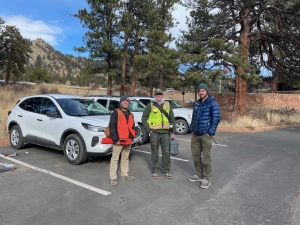
When Mueldener learned about the geospatial internship, he knew it was an opportunity he couldn’t pass up. While Mueldener went into his internship with prior experience using geospatial data systems in the field, he wanted to fully understand the backend of data collection and management.
“Completion of this program was one of the most pivotal steps in my career and set me apart from many,” said Mueldener. “It gave me a foundation I continue to build upon and will keep building upon the rest of my career.”
Now, as Mueldener leads the RMNP Exotic Plant Management Program, he routinely uses the skills he developed in his internship.
Horn had a similarly immersive and career-excelling experience to Mueldener.
In the span of 6 months, she wrote and finalized a written communications strategy associated with the strategic plan, developed a scientific internal newsletter for park staff and partners, worked within various data management systems, contributed to the setup, distribution plan, equipment tracking, and checkout procedures for a new fleet of Samsung tablets used for field data collection, and contributed to park NEPA compliance.
She applies many of her learned skills to her current position as a natural resource specialist at an environmental consulting firm in southern California.
Rocky Mountain Conservancy’s support of the geospatial internship program reflects a commitment to invest in the people who steward Rocky into the future. Through hands-on training, mentorship, and goal-oriented project work, the program equips individuals with the necessary skills to succeed in their conservation careers.
“This internship doesn’t just prepare people for future jobs, it helps shape thoughtful, invested land stewards,” said Coultas. “That long-term investment in people is crucial for the future of our parks.”